Understanding and Assessing Impacts
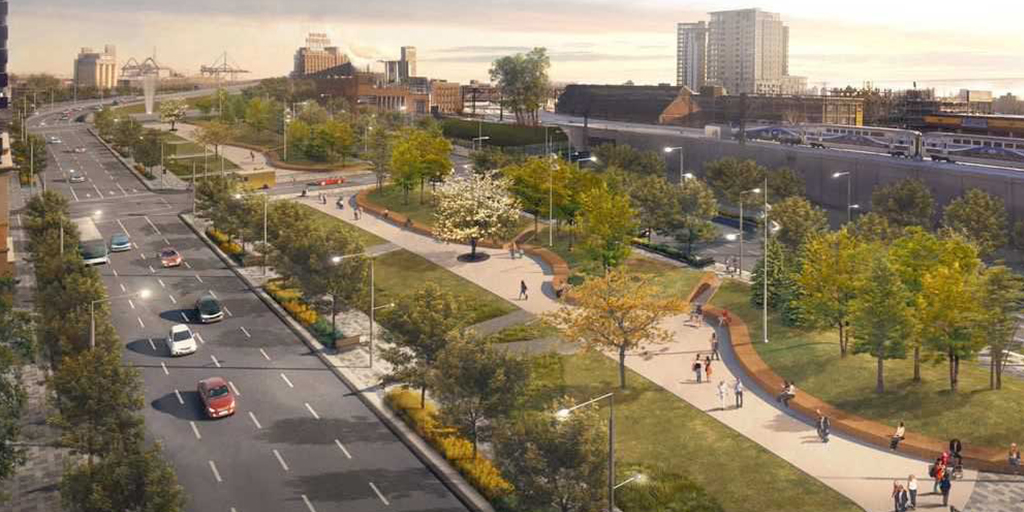
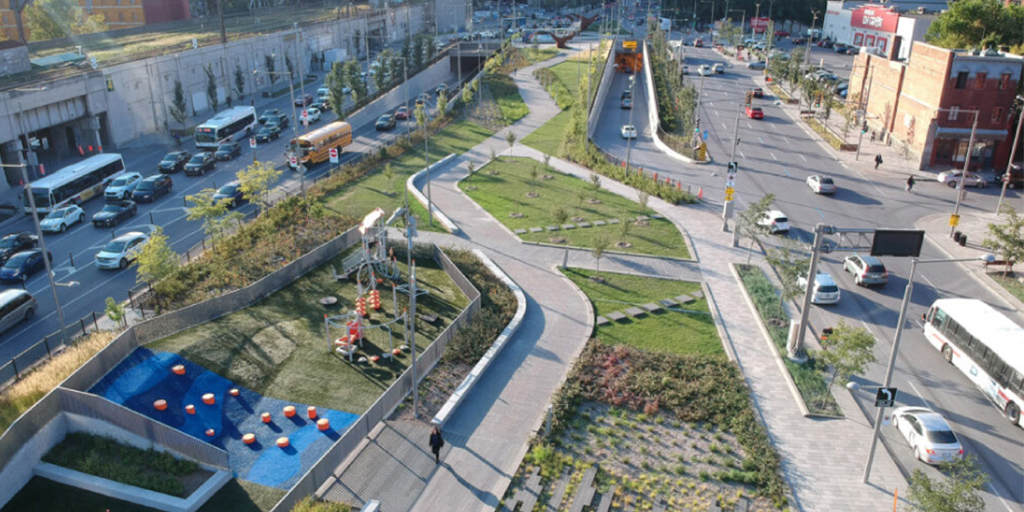
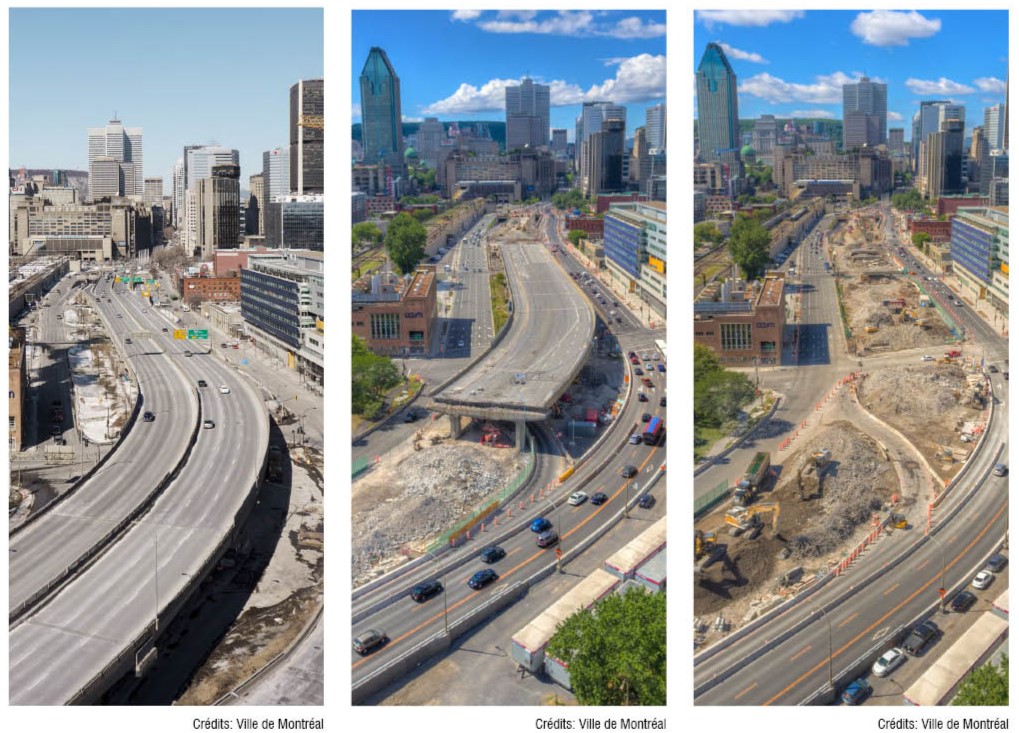
The removal of the Bonaventure Expressway opened over three hectares for continuous public space to improve access to nature and foster social connections. In addition to enhancing urban livability and community well-being, it presented a significant opportunity to reduce the reliance on cars in downtown Montreal, reconnect the fragmented neighbourhoods, and create a vibrant entrance to the city centre.
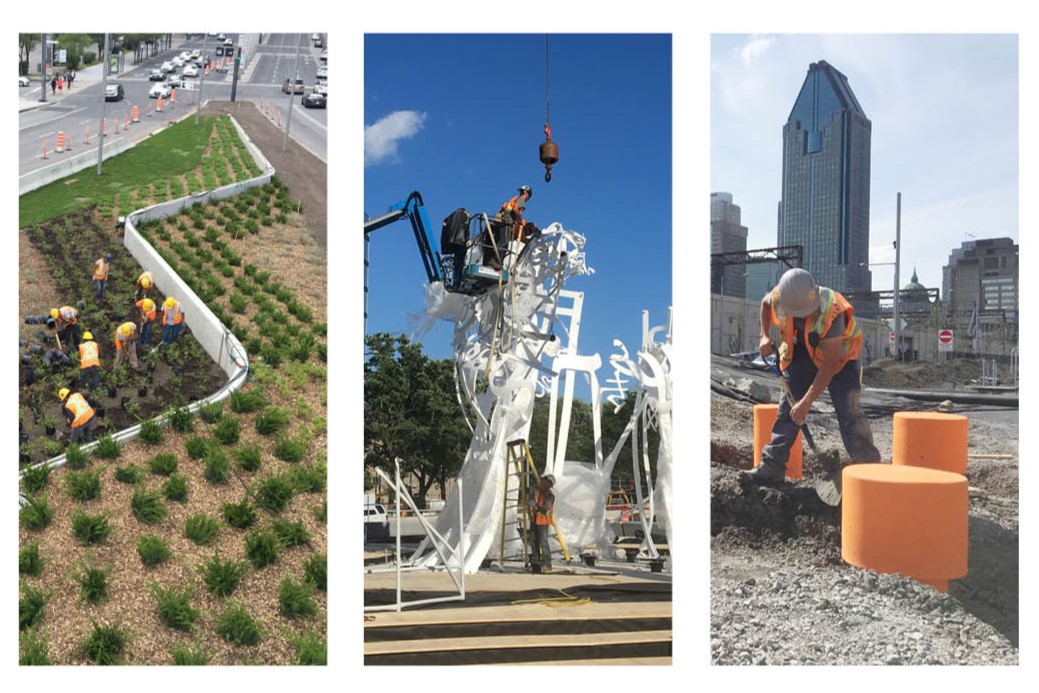
Stormwater management was a key focus of the project, aiming to more efficiently manage and filter urban runoff on-site, increase permeability, create cooler microclimates to mitigate urban heat, and increase accessibility to nature within a densely developed environment – particularly in a neighbourhood that previously lacked park space. By replacing the large-scale grey infrastructure with green infrastructure, including rain gardens and vegetated islands, the project is able to significantly enhance environmental sustainability and ecological functions (e.g., pollination and carbon sequestration), and support urban wildlife and biodiversity. This nature-positive design thinking and prioritization of nature-based solutions paved the way for SITES certification, a program for sustainable land design and development administered by the Green Business Certification Inc. (GBCI). Rousseau Lefebvre pursued SITES certification from its inception, reflecting the deep commitment to sustainability and environmental regeneration.
Finally, the site’s rich historic context was pivotal in shaping Les Lieux Publics Bonaventure, presenting an opportunity to create a poetic and engaging open space by blending urban biodiversity recovery with sculptural elements and public art, all the while advancing urban sustainability development goals.
Use of climate information in decision-making:
While detailed climate data was not readily available during the development of this project, design decisions were intentionally made to enhance climate resilience, sustainability and biodiversity recovery. Particular attention during the design phase was paid to vegetation, with the selected plants chosen based on their ability to adapt under varying stormwater conditions and urban environmental stressors.
In addition to vegetation adaptability, stormwater management was also a key consideration: the site was designed specifically with larger storage volumes in mind to hold stormwater on-site and infiltrate it efficiently within three days. The design maintains a balance between pervious and impervious surfaces (roughly 50-50) and integrates physical topographic modifications, such as depressions and mounding, as well as below-grade storage improvement presenting practical strategies for both water retention during heavy rain and resilience during drought.
Technical input was provided by engineering collaborators who analyzed IDF curves and 85th percentile rainfall events, which directly informed the implemented solutions. While future precipitation projections were not formally included, the design integrates flexibility to handle rainfall uncertainty by incorporating additional capacity exceeding current standards to accommodate uncertain future rainfall volumes. By translating technical input into functional design elements, Les Lieux Publics Bonaventure Project merges ecological, technical, and aesthetic goals, favoring practical, adaptable solutions rather than prescriptive calculations. In addition to the engineering data, key guidance was provided by the city’s stormwater management regulations, in addition to the SITES certification performance measures, to ensure that water retention, infiltration, and pollutant control were embedded in the design.
Expressway timeline
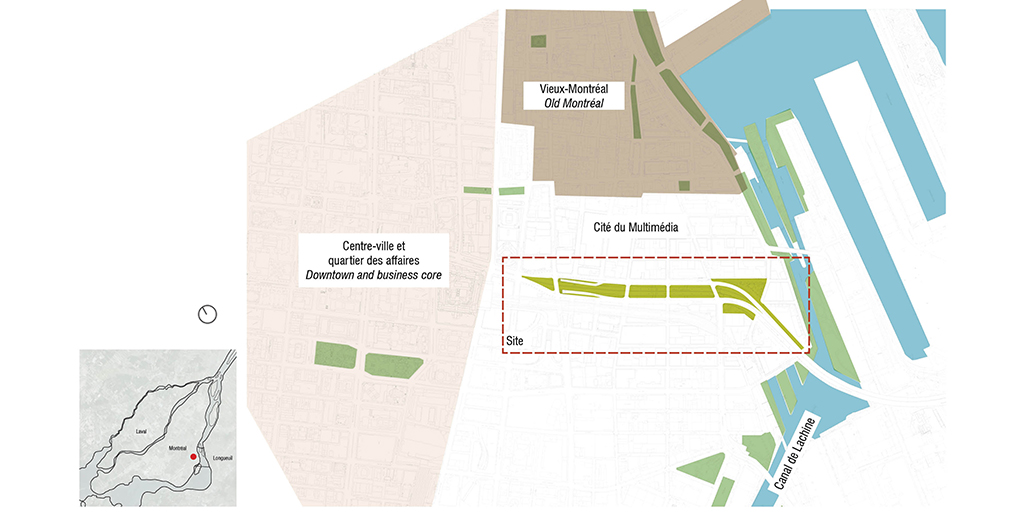
Site context plan