Understanding and Assessing Impacts
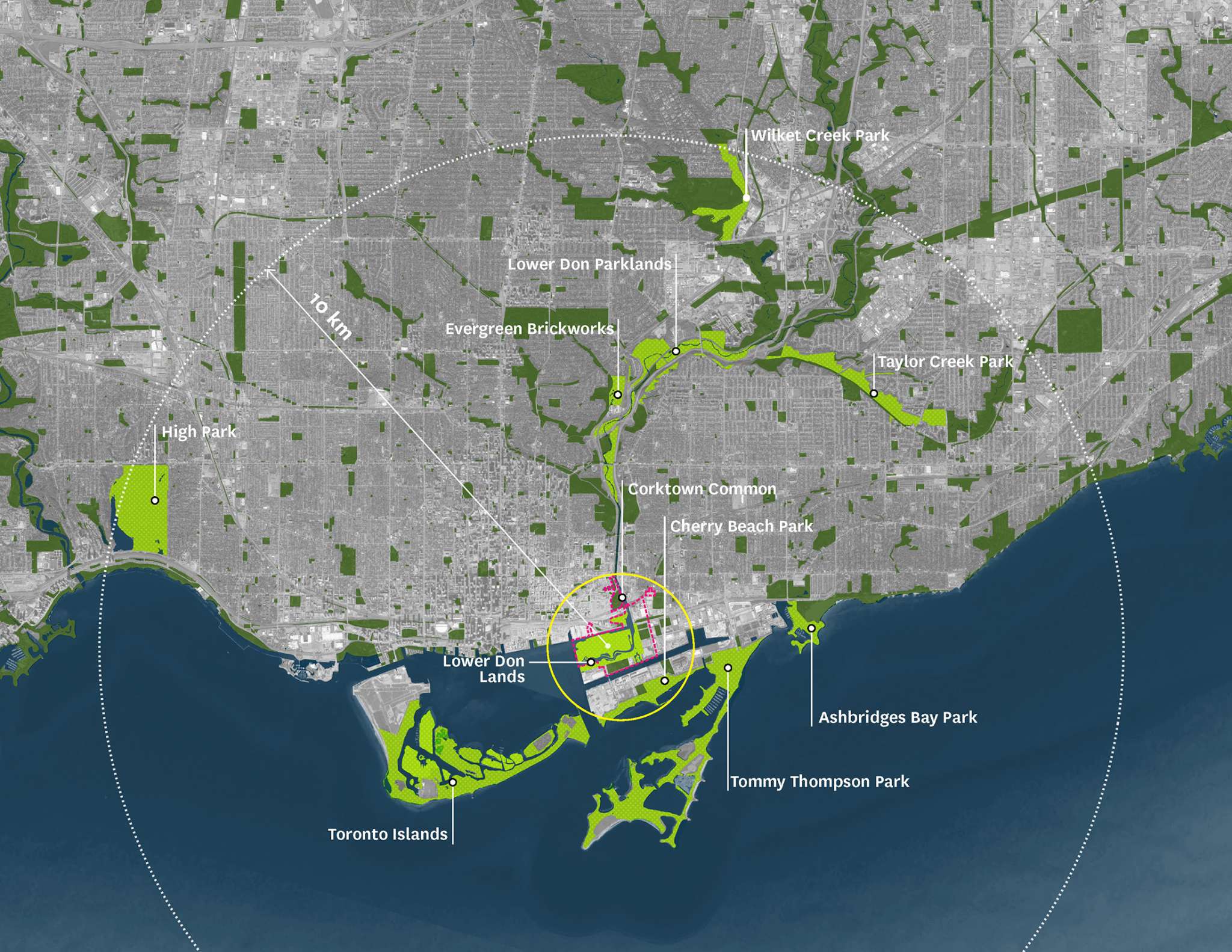
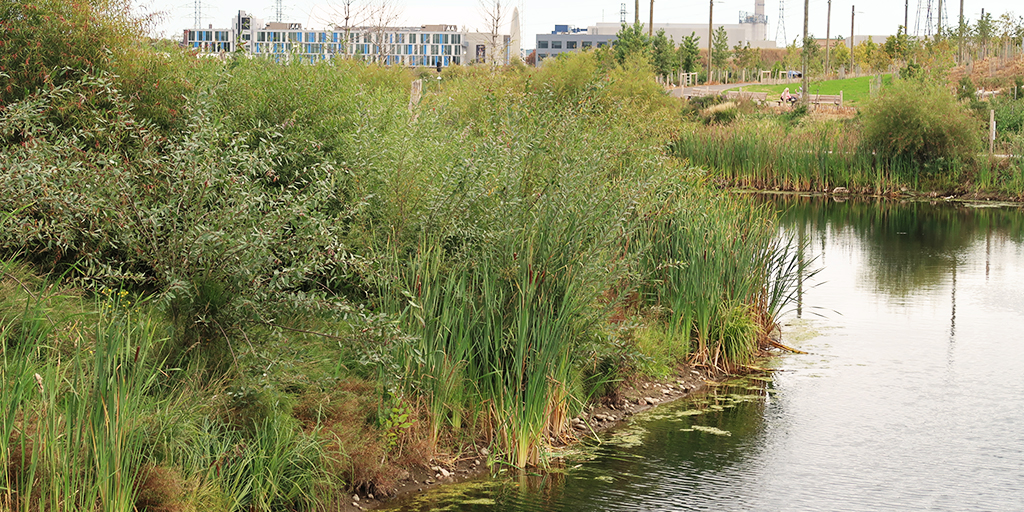
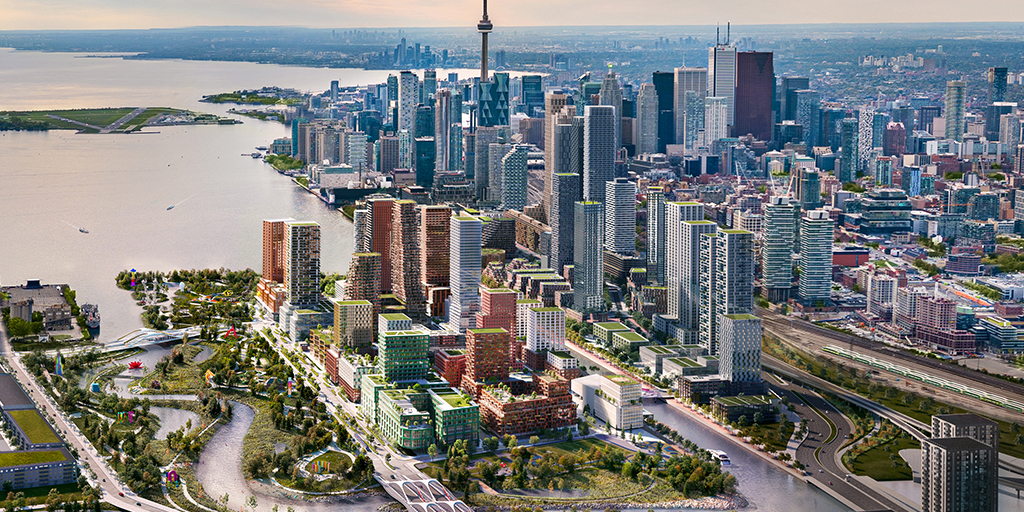
Today, 290 hectares of southeastern downtown Toronto, including the Port Lands, are at a significant risk of flooding from the Don River when prolonged or intensive rainfall causes the river to overflow its banks. These risks are compounded by the increasing intensity and frequency of climate change related extreme weather events. The PLFP Project was initiated to mitigate these risks. Once complete, the project will provide flood protection to 174 hectares of vulnerable lands, and transform over 30 hectares of brownfield into a naturalized river valley system, including 13 hectares of new coastal wetland and 4 hectares of terrestrial habitat.
Reconciliation and reconnection serve as the project’s driving themes: reconnection between the land, river and lake, and reconnection between people and nature. The PLFP Project is therefore a tremendous act of reconciliation — both with the Indigenous peoples involved with the project, and with the land and water that have been so significantly altered by industrialization. This renewed relationship is notable particularly for many residents in the city who have limited access to green space, presenting new opportunities to engage with nature, improve public health, and strengthen communities ties with the revitalized landscape that holds rich cultural and historic significance.
This project aims to restore the landscape’s natural resilience lost through urbanization by using bioengineering and nature-based systems to restore the river valley and recreate valuable habitat. In doing so, the project will not only establish flood protection, but also help to mitigate effects of urban heating due to global warming by creating microclimates and providing access to cooler natural areas.
Use of climate information in decision-making:
Climate projections and data availability, such as revised lake levels and storm intensities, directly informed design decisions. Recognizing that extreme rainfall events associated with the historical 100-year storm return period are becoming more frequent and intense, the design team adopted higher elevation thresholds and higher built-in safety margins or “fail-safe” measures. The project’s boundaries and standards were directly informed by the benchmarks and guidelines provided by the Toronto and Region Conservation (TRCA).
The eight-year duration of the PLFP Project demanded adaptability to evolving climate information and data. For instance, during the design phase the 100-year lake level was revised twice, particularly after flooding events that occurred in 2019. The uncertainty about the impact of climate change on the water level in the Great Lakes reinforced the need for design measures that are fail-safe and adaptable. The new climate data required redesigning the stormwater systems and infrastructure to meet updated elevation projections where possible.
To establish long-term flood protection, the average grade of the Port Lands was raised by approximately two meters through an extensive ground improvement strategy. Design decisions also responded to anticipated prolonged inundation from high lake levels by incorporating landscape features that can adapt to variable conditions. For example, flood-resilient materials, such as stone dust paths were used instead of asphalt for lower-lying areas to enhance durability and reinforce long-term functionality under varying water levels.
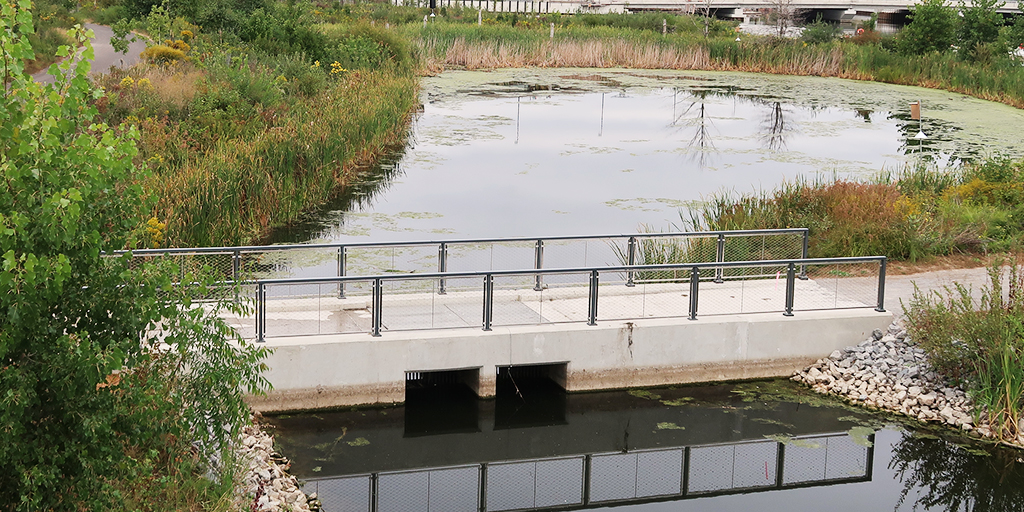
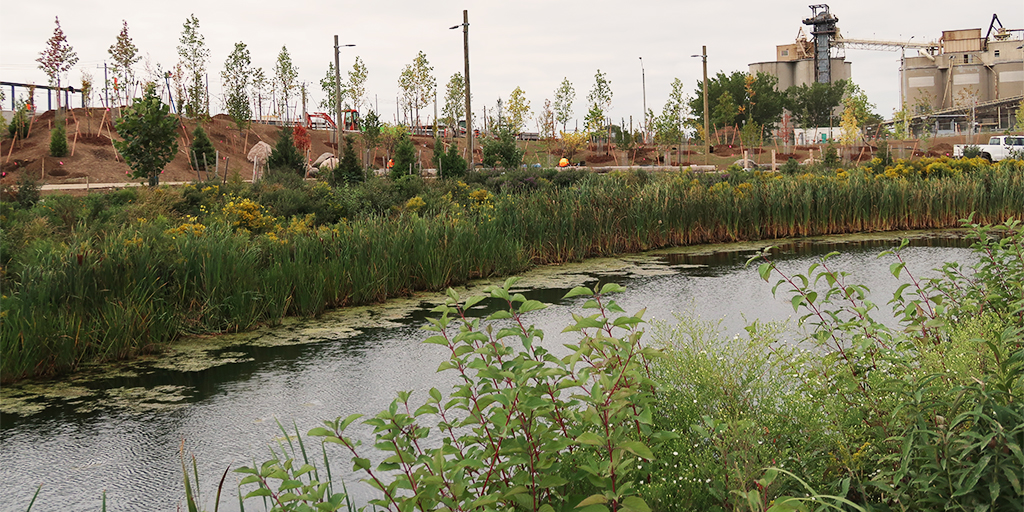
The integration of nature-based solutions was central to the project’s strategy and was also informed by climate data and projections. An adaptive planting strategy was adopted to establish ecological flexibility to accommodate changes in species migration patterns expected under warming temperatures. To foster biodiversity recovery and the return of native ecological communities, new landforms and water channels were created for the wetlands in the re-naturalized river corridor. A forested riparian edge was also constructed to moderate water temperatures, provide urban cooling, treat urban runoff, and re-establish critical wildlife habitat.
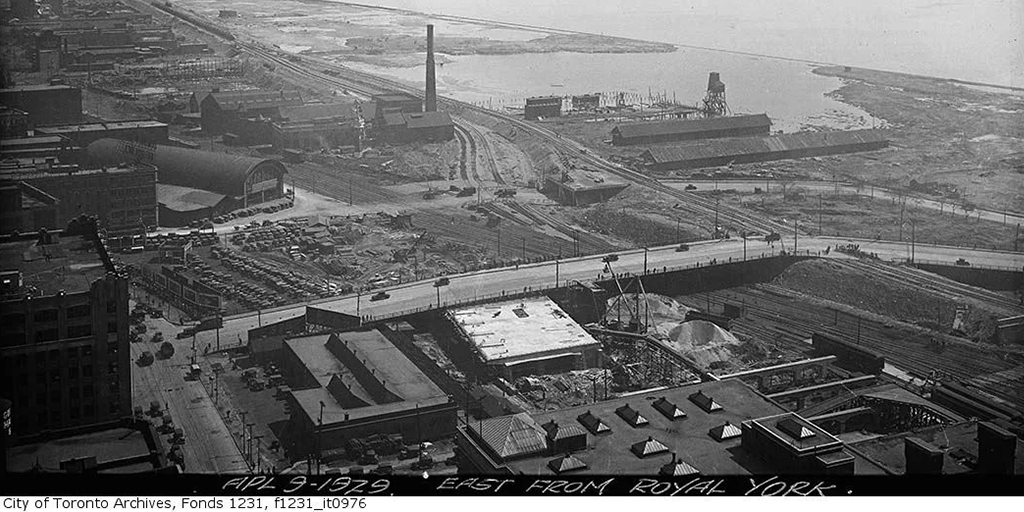
Toronto's Waterfront Precincts, 1929
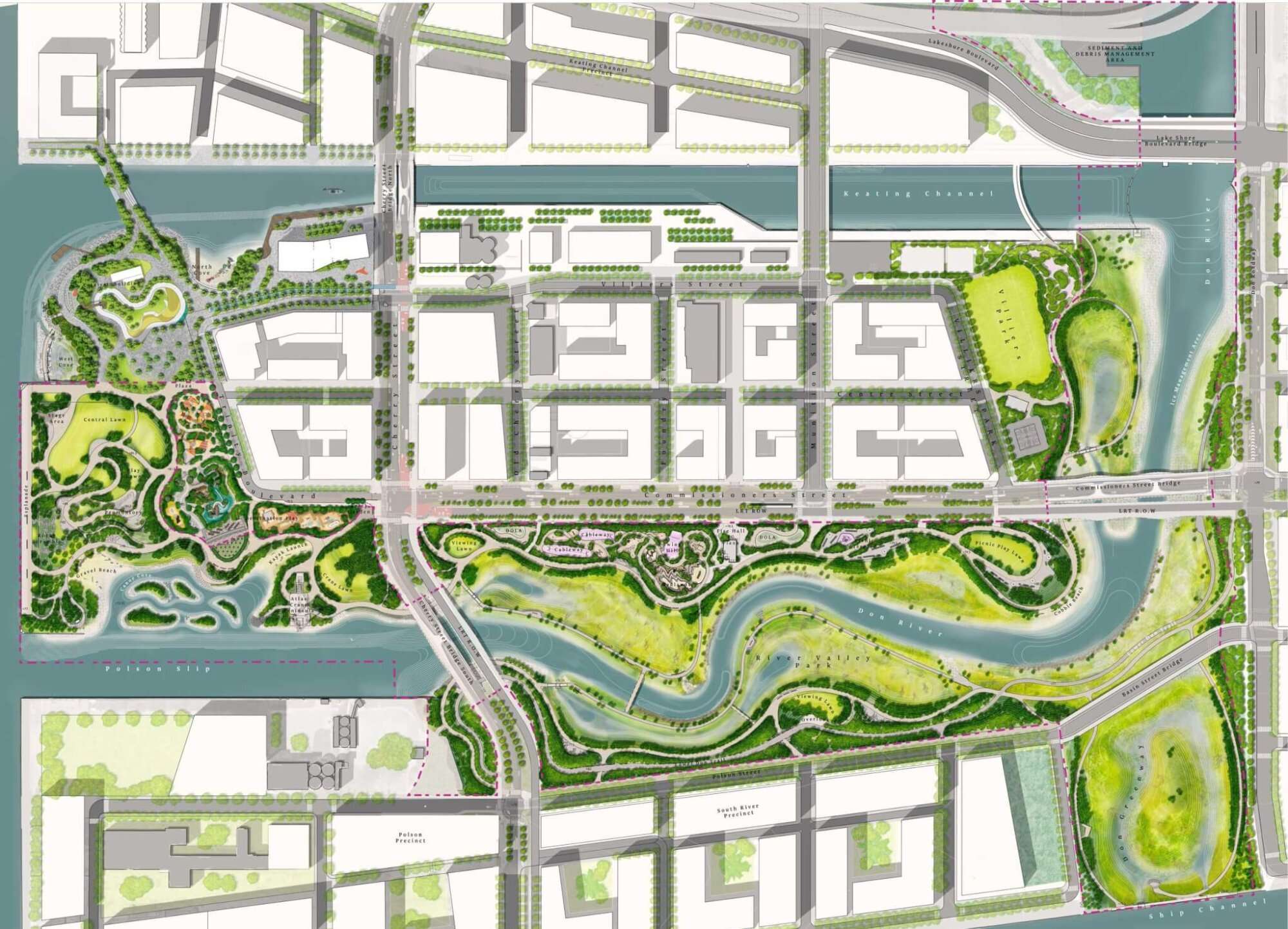
Site context plan