Virtual Introduction
To prepare participants for the in-person training, virtual training(s) with the newly established Climate Change Advisory Committee took place a few weeks before the in-person workshop. This virtual training served as an introduction to the method and process being used during the in-person workshop, reviewing the Climate Change Adaptation Plan approach and process from Georgina Island First Nation, as well as an overview of the climate data being used for the workshop in Chisasibi.
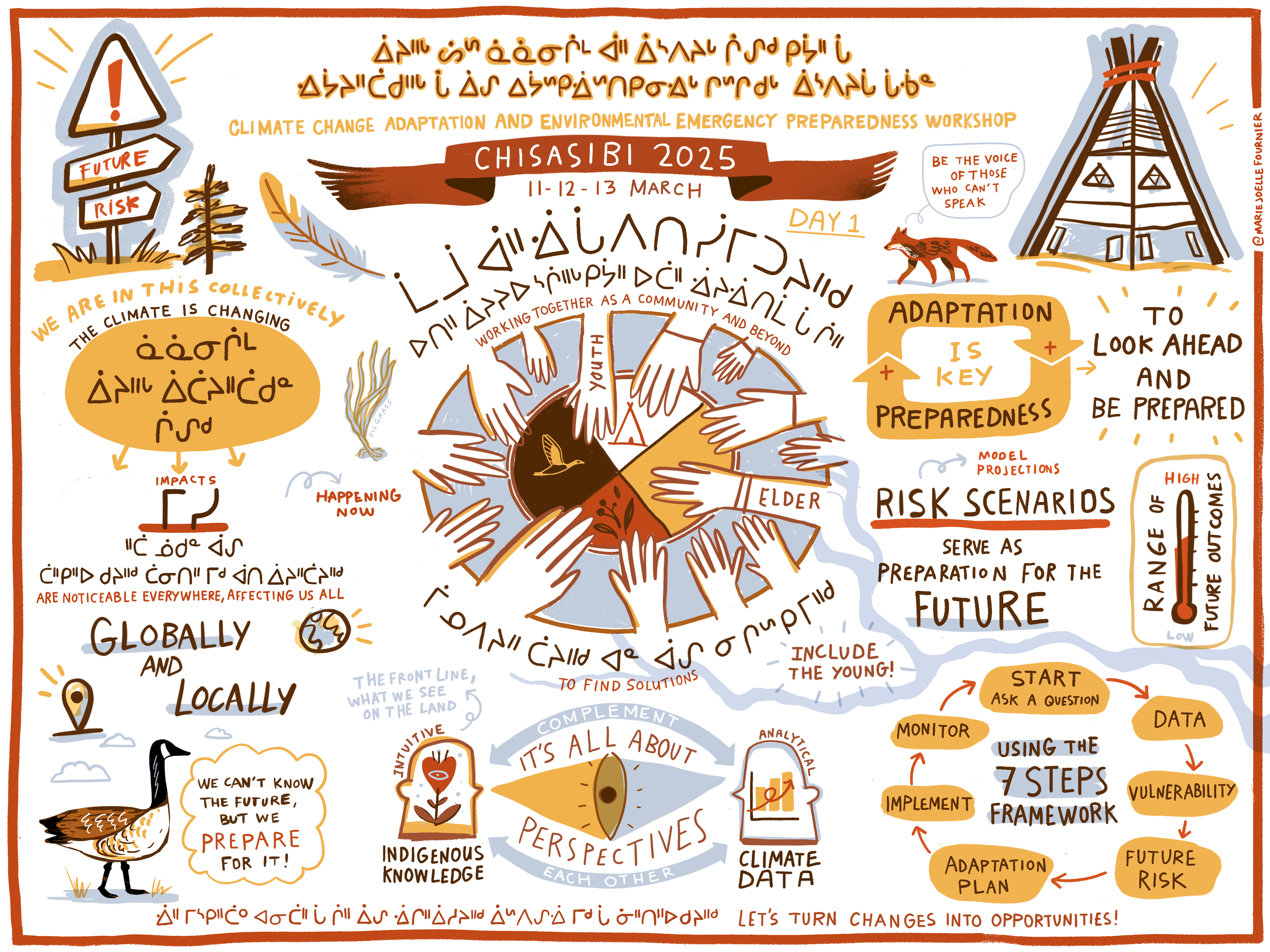
Day 1 of workshop:
Opening and introduction, roundtable, sharing:
Every attendee participated in a roundtable of introductions and sharing of their perspectives and priorities.
- Caribou and white moss decline
- Snow falling before ground is frozen
- Hydro dam bursting (fear)
- Forest fire
- Unsafe ice
- Rain in January
- Decrease of salinity in water
Presentations:
- Adaptation Planning in Action in Georgina Island (used this process as a template for adaptation planning throughout workshop)
- Georgina Island and Land Relationship Visioning overview
- Framework overview
- Climate Change 101 & Data Projections
- Western climate data
- Colonialism and climate change
- What is climate change and climate data
- Regional Climate Change Vulnerability Assessment
- Process behind vulnerability assessment
- Quantifying Indigenous knowledge to understand vulnerability through an adaptation tool.
- Climate Forum Overview on Climate Adaptation Priorities
- Overview of CNG climate change unit and forum
- Environmental Emergency Preparedness
- Firefighting v. forest fire fighting
- Training and equipment maintenance,
- Lines of communication
Discussions after presentations before lunch.
Activity directions and handout interpretation:
- CCCS presentation about climate data booklets (how to read/use)
- Conversation ensued, participants asked CCCS about climate data, discussions around observations on the land the connections to the data being presented.
- Conversation continued until the end of the day.
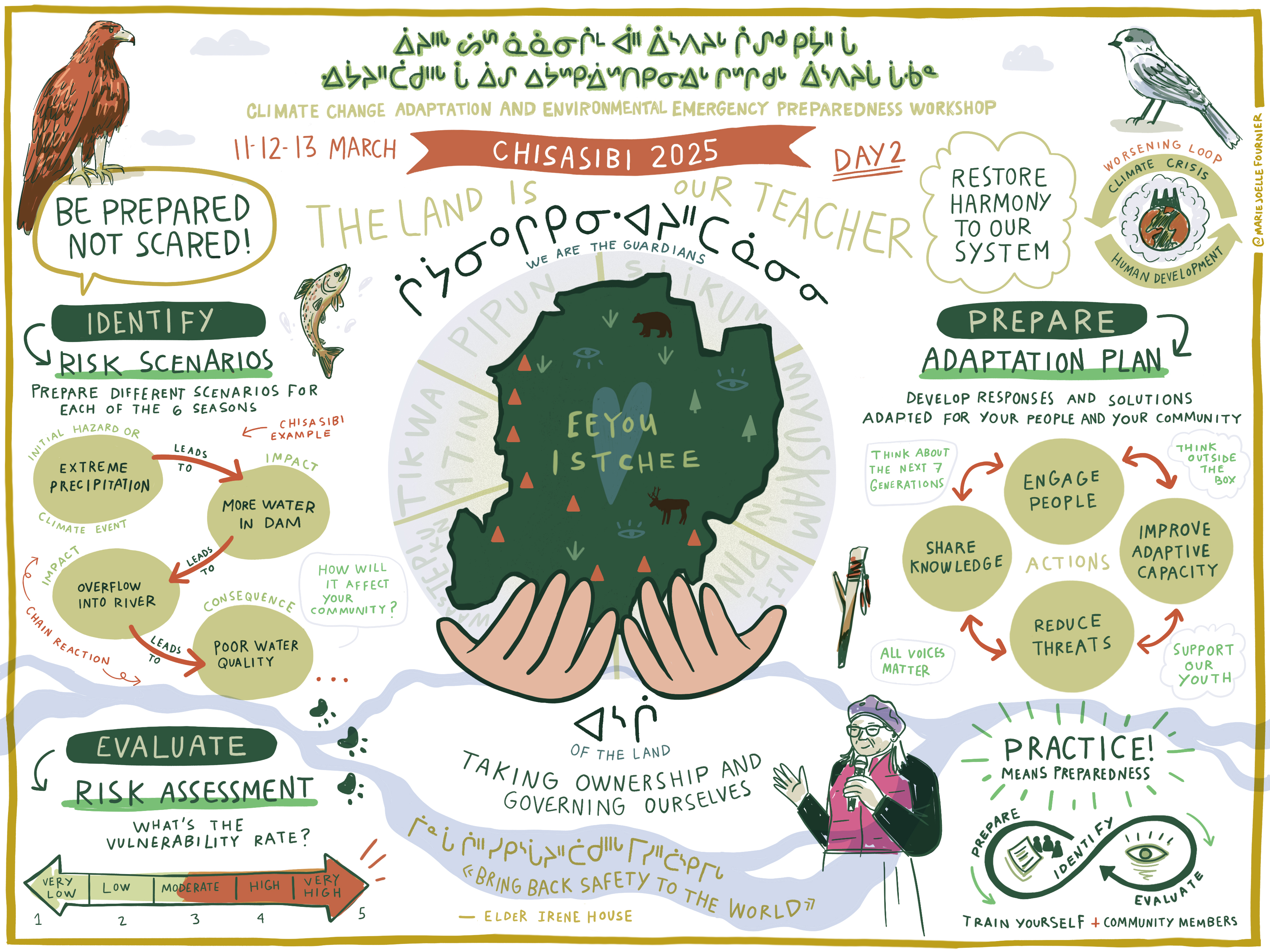
Day 2 of workshop:
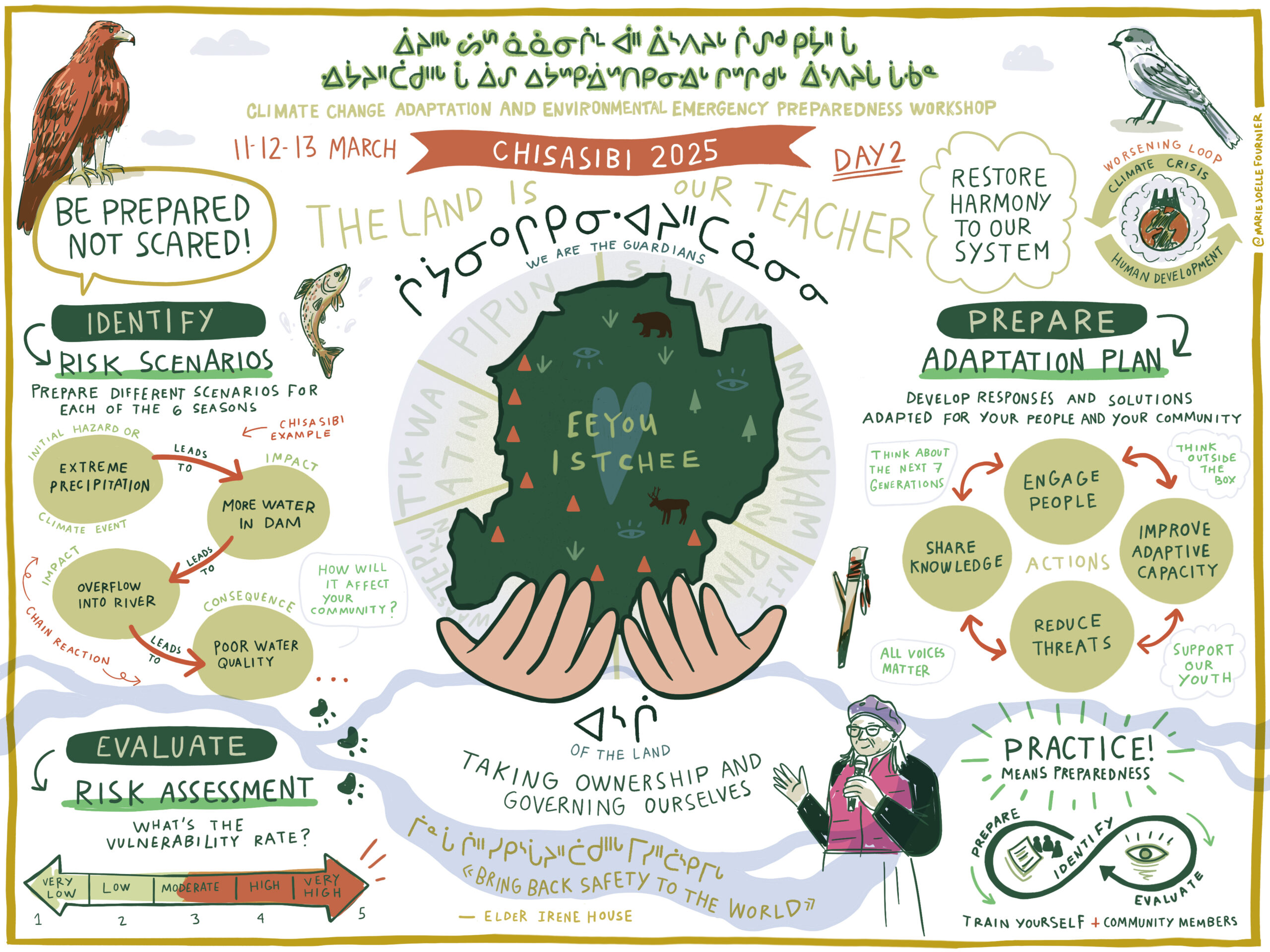
Activities deviated from the agenda to ensure enough time was allocated for the risk scenarios workshop and to begin adaptation planning based off understanding the risks.
- Likelihood and Consequences Exercise
- Climate Data Workbook Presentation and Introduction
- Climate data workbooks developed by CCCS, one for the broader Eeyou Istchee Territory and then another for Chisasibi specifically.
- Data was presented in context with the Cree Calendar and the six seasons within that calendar.
- The intention was that workshop participants use the projected data to understand potential risks and consequences associated with those risks.
- Workshop: Risk Scenarios
- Risks were identified and then groups were formed based on region and relevance to each other, (a group for Chisasibi, a table with public safety/health representatives, etc.)
- Each group was given a risk to evaluate, groups had group leaders – representatives of the CCAC – as a “train the trainer” attempt, so that individuals had the experience facilitating the discussions. The objective of that was for the CCAC group facilitator to gain facilitation skills so that they could replicate the workshop discussions in their home Communities in the development of their own adaptation plan.
- Group leaders used markers and a flip-chart to document the discussion where risks were identified and discussed.
- Discussions were summarized and shared back to the wider group.
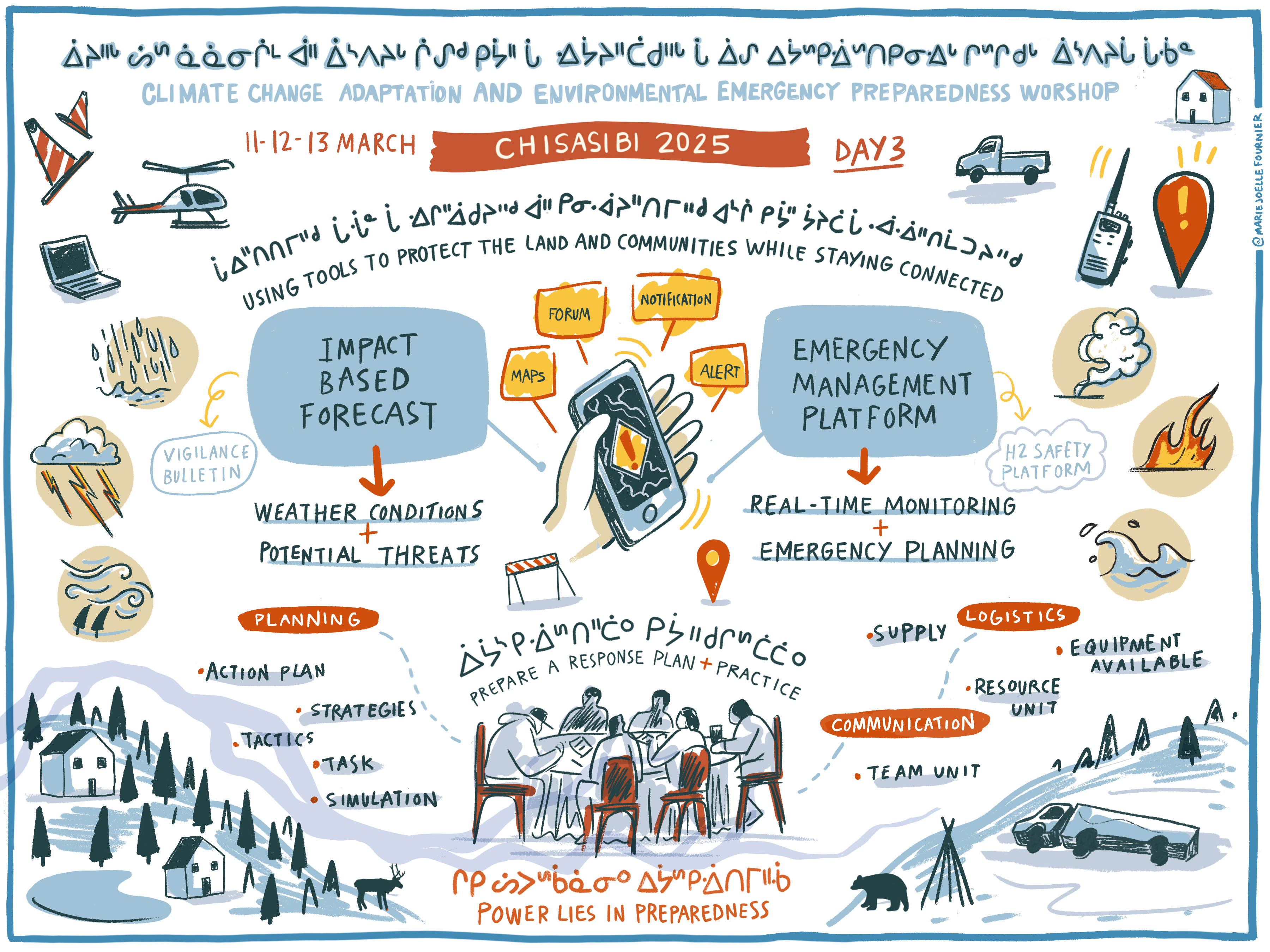
Day 3: Environmental Emergency Preparedness
Day 3 was dedicated to environmental emergency preparedness, understanding the interconnectedness between Climate Change preparedness and emergency preparedness. Tabletop exercises addressing various potential scenarios, communications and coordination were facilitated for participants to gain an in depth understanding of the processes in the case of emergency.